|
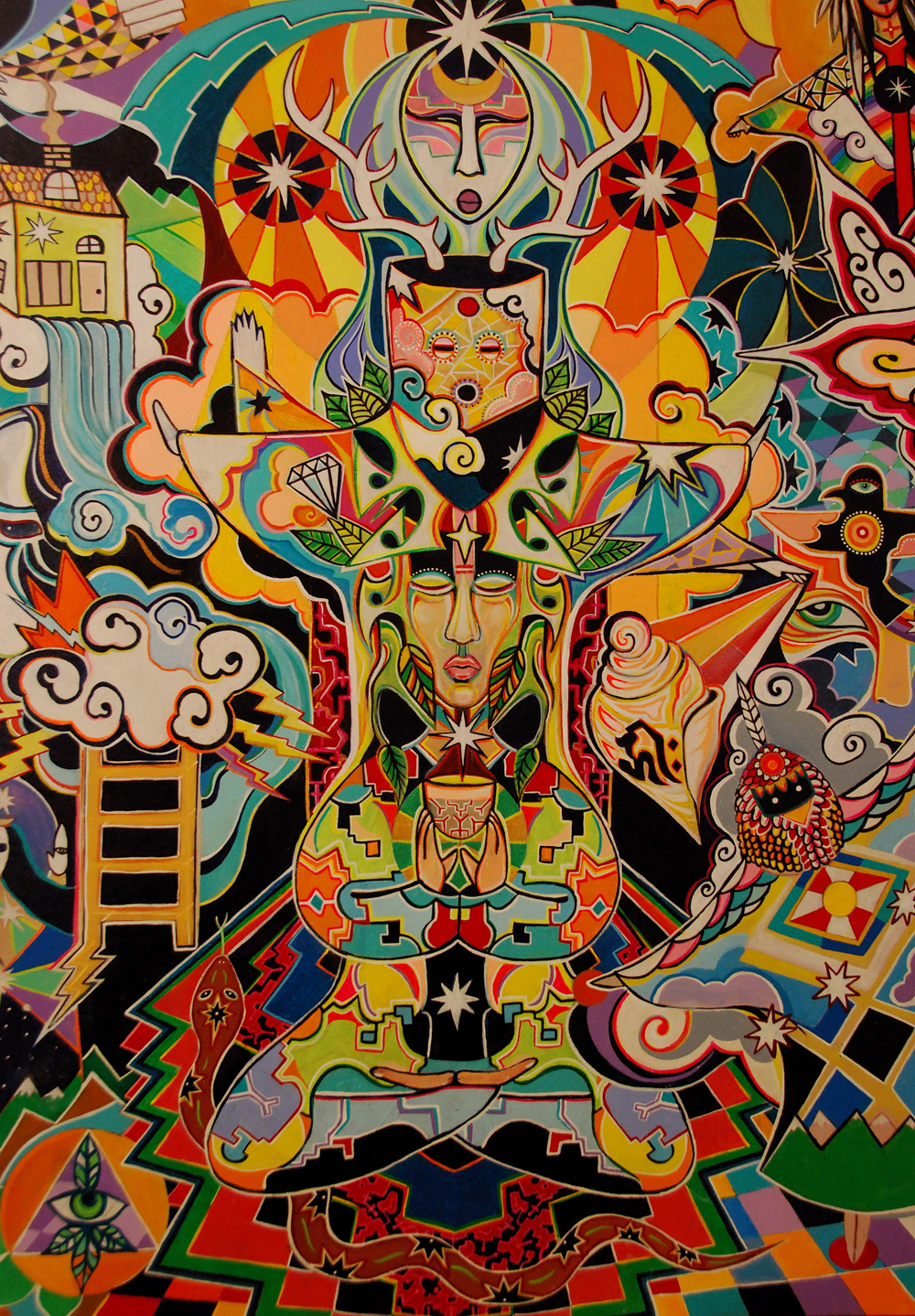
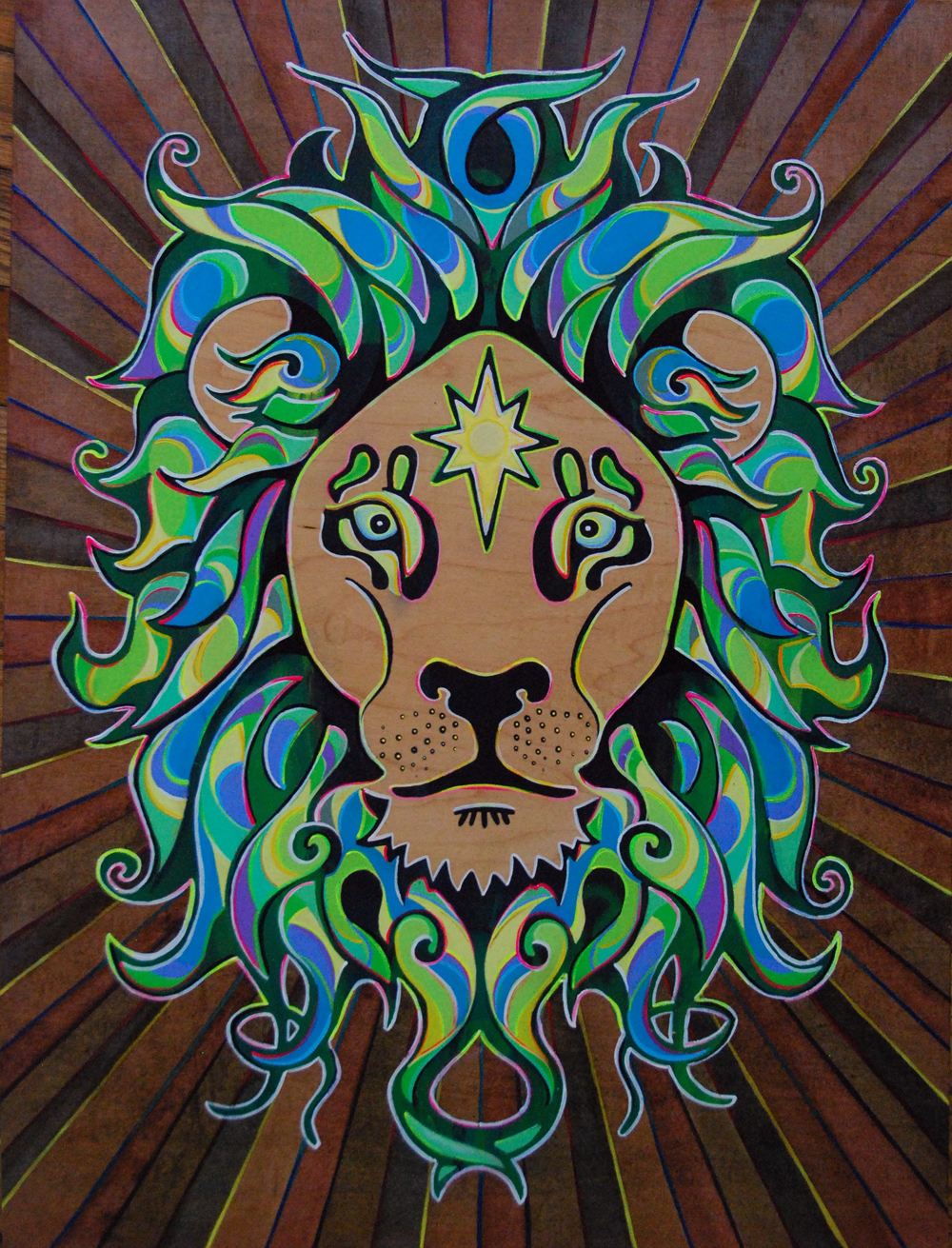
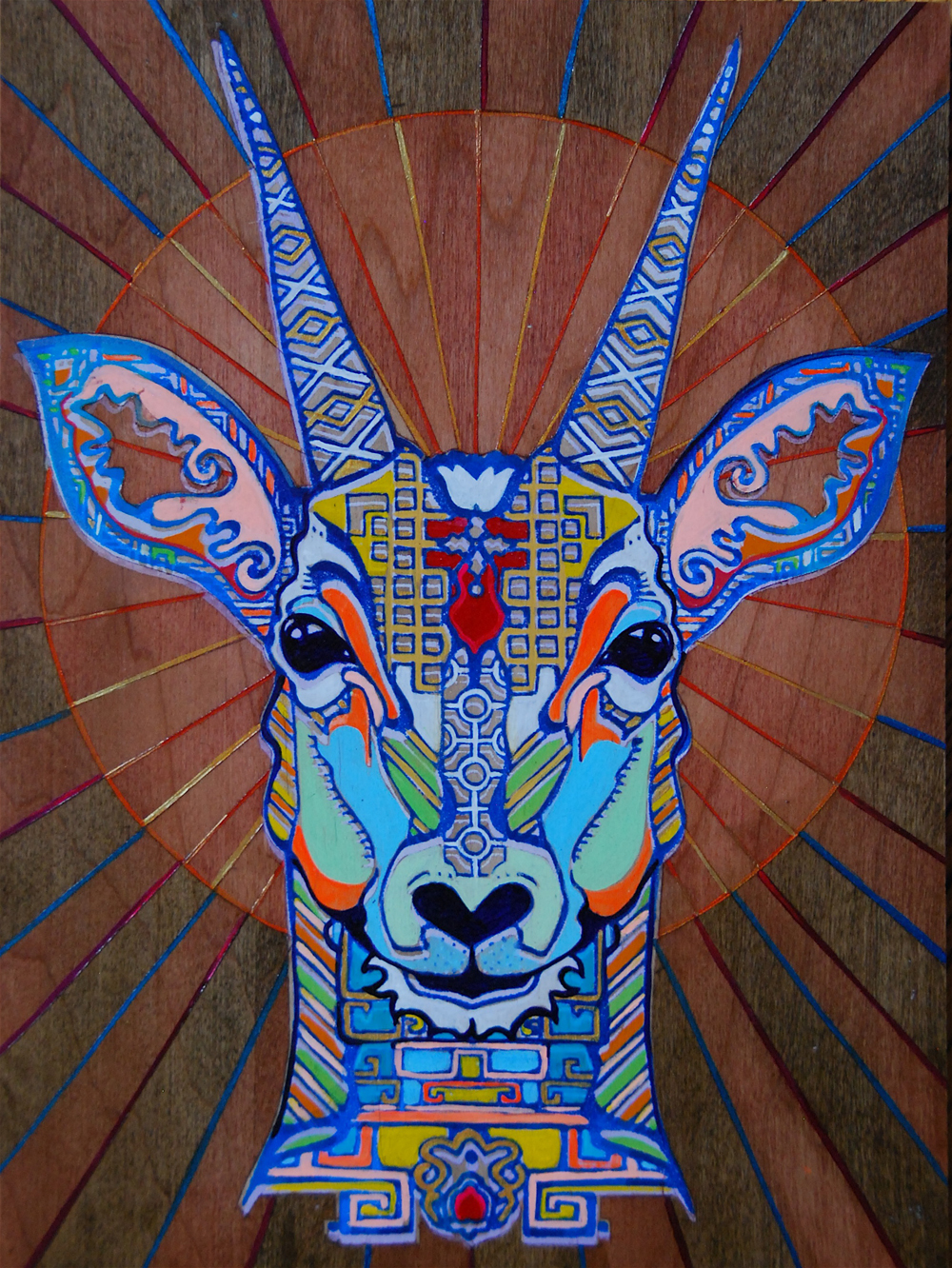
"I am struck by the energy of things… the pulse in the seed that signals germination, the whisper of spirit that guides leaves toward sunlight, the dynamic forces that twist wind into tornados, blast volcanic mountain tops skyward, devour stars and birth galaxies. It is from here that I begin to paint. It is by this energy that painting flows through me toward the creation of a charged, symbolic iconography. Visual Medicine. I honor the flash that split the zygote in my mother's womb. One spirit born in two bodies. I cannot address the work that I do without acknowledging my twin brother Daniel. My technique and aesthetic are a direct result of our decades long visual dialogue. My work is an offering of my heart and an aspiration towards ever increasing strength, grace, joy and faith, a celebration of divine magic and infinite love and an expression of gratitude to the spirit that animates this cosmic dance. "
|
David Frank | Visual Medicine
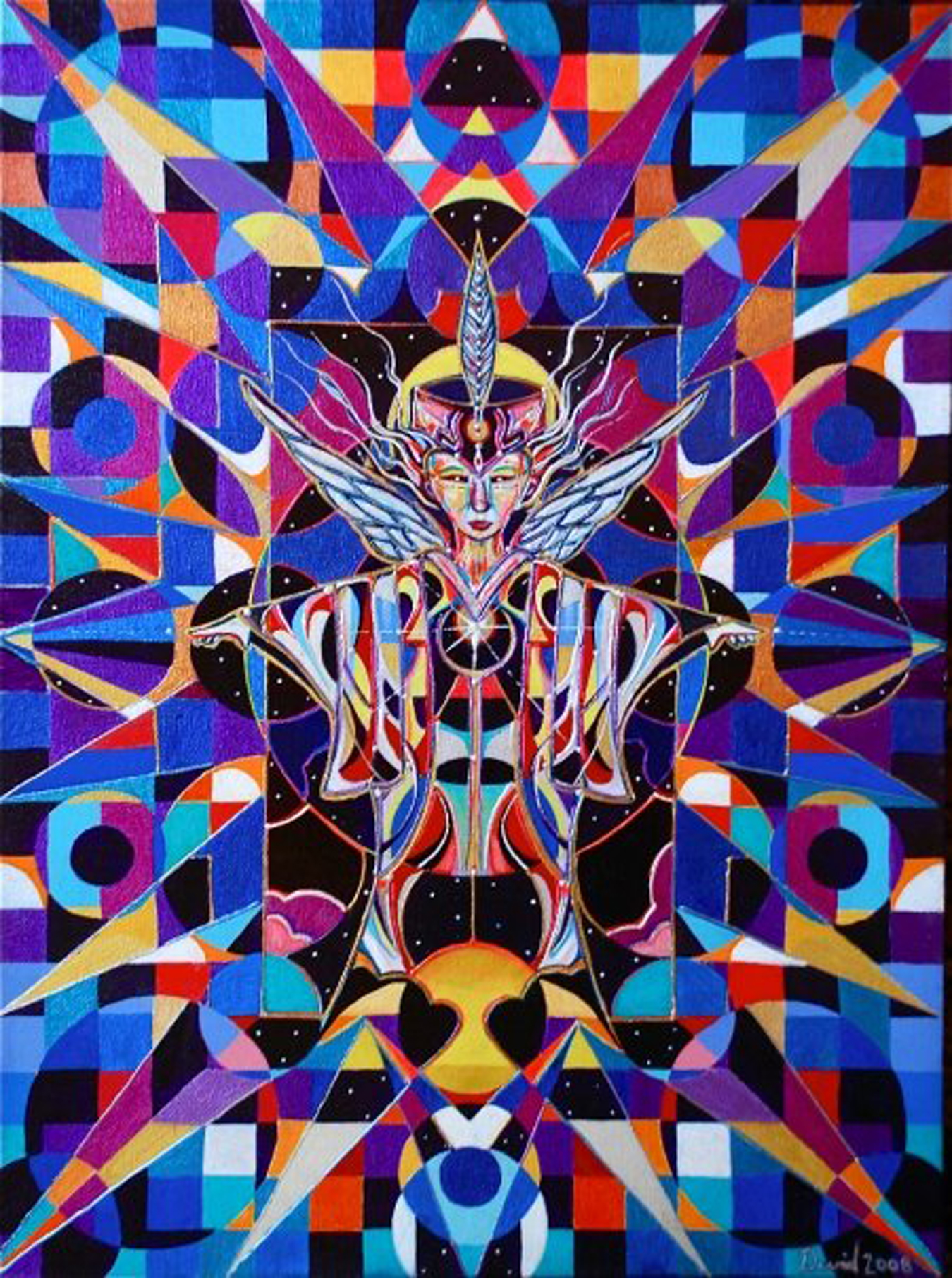
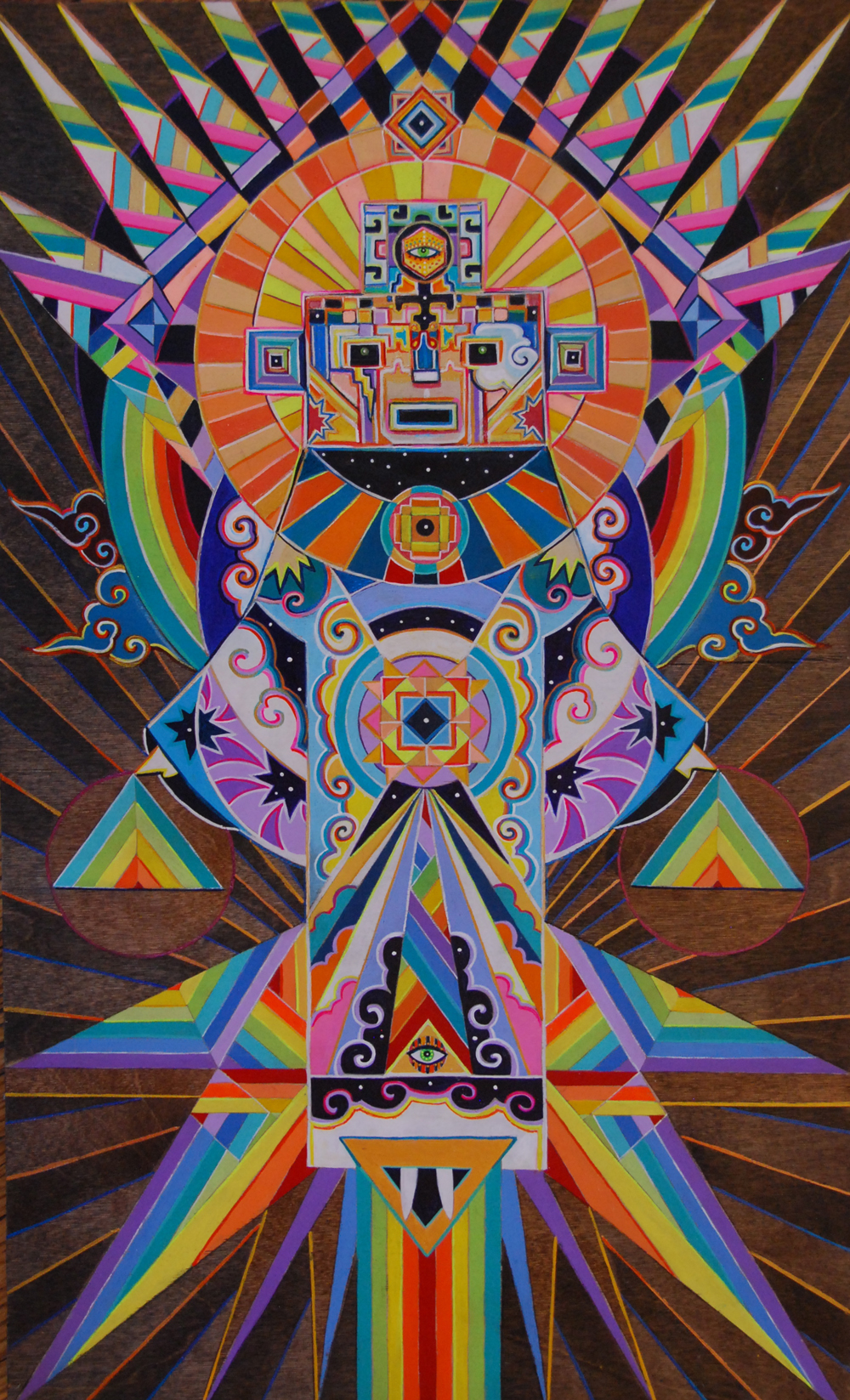
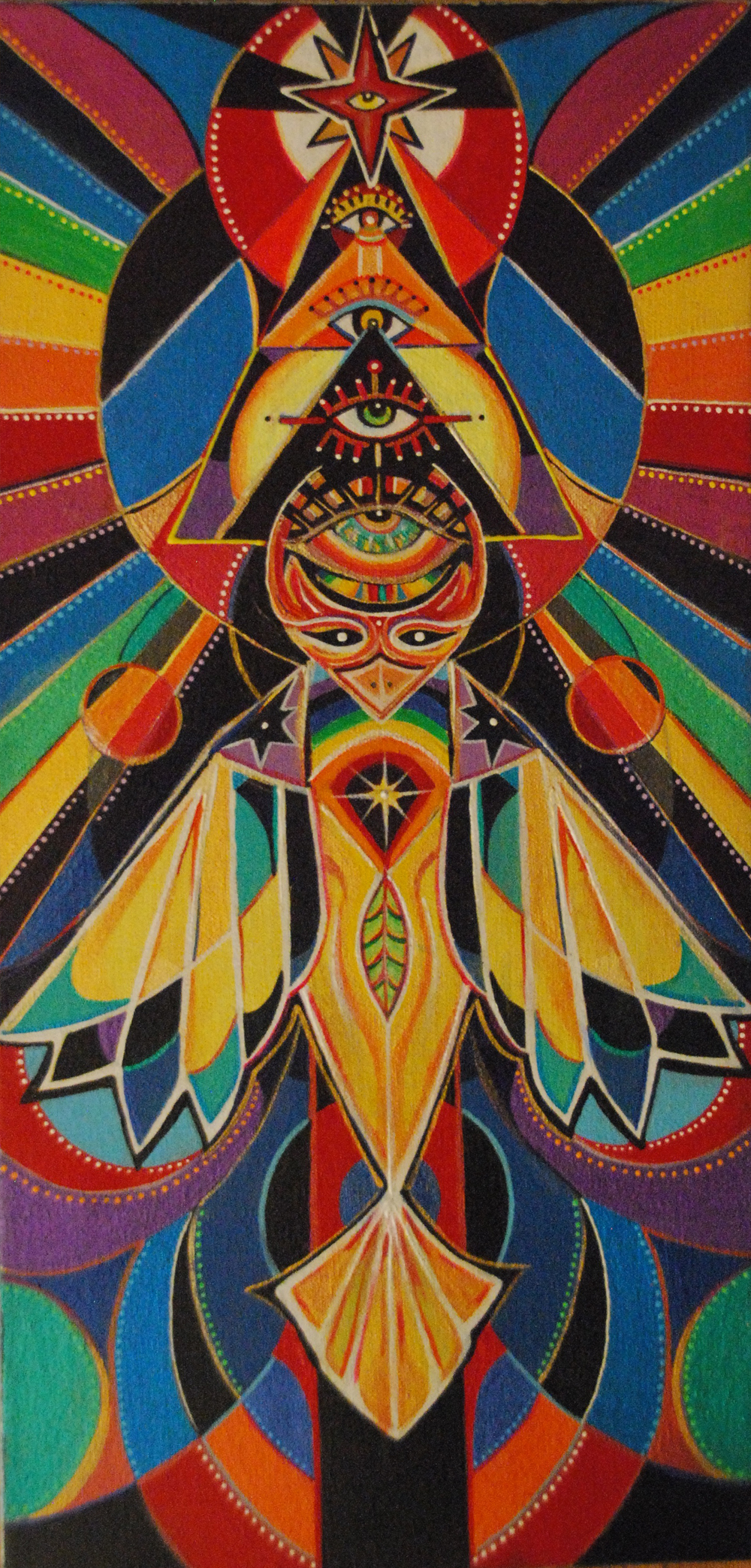
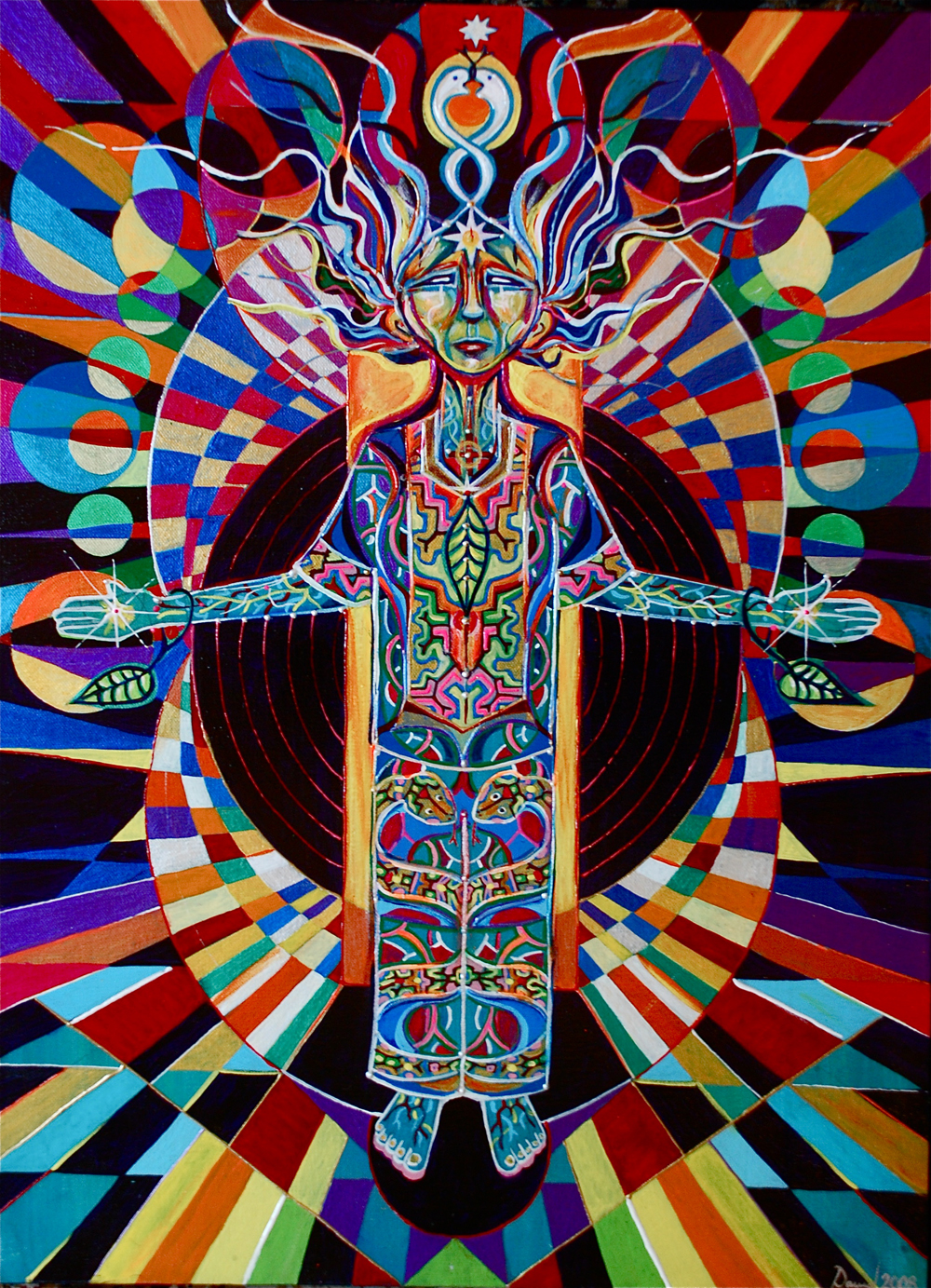
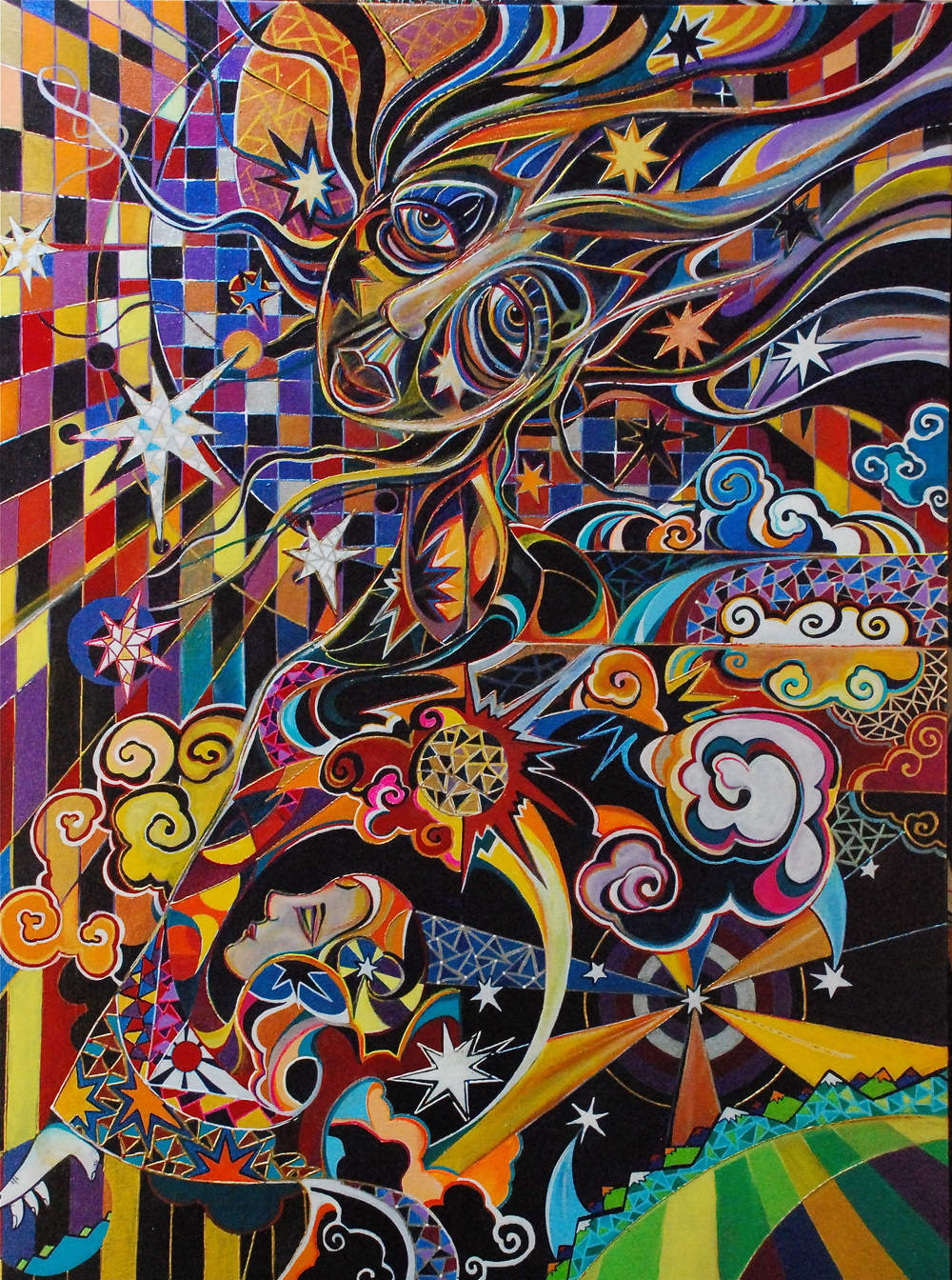
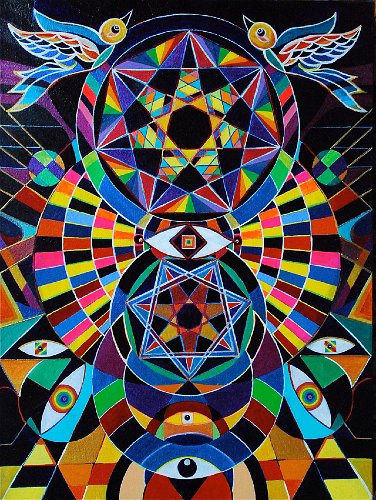
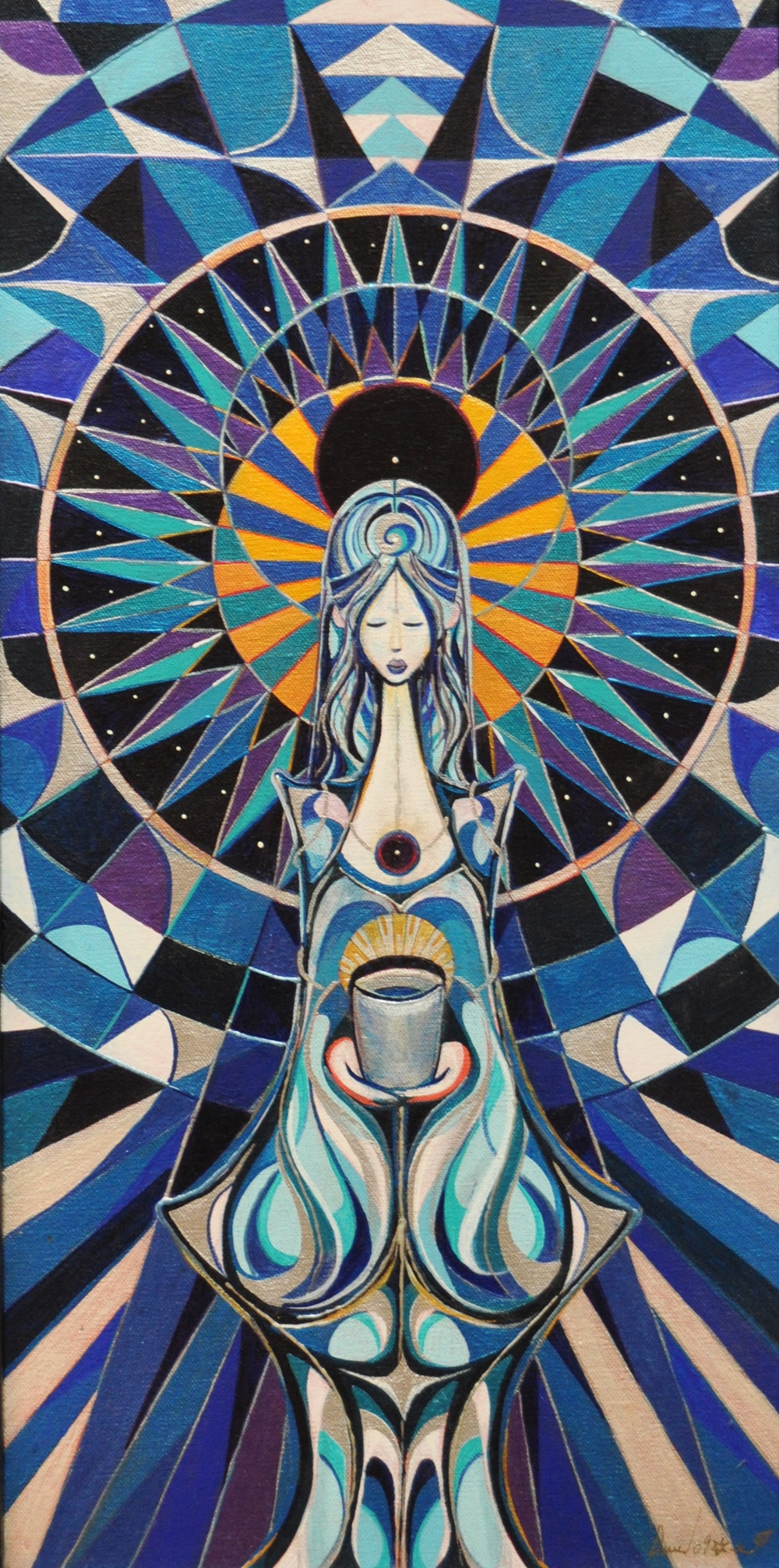
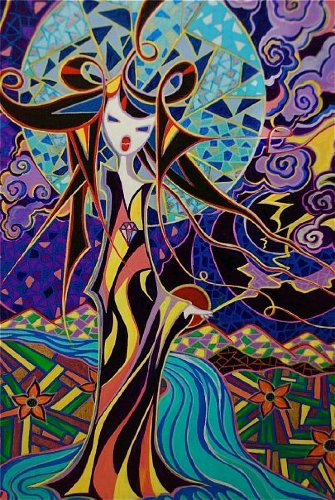
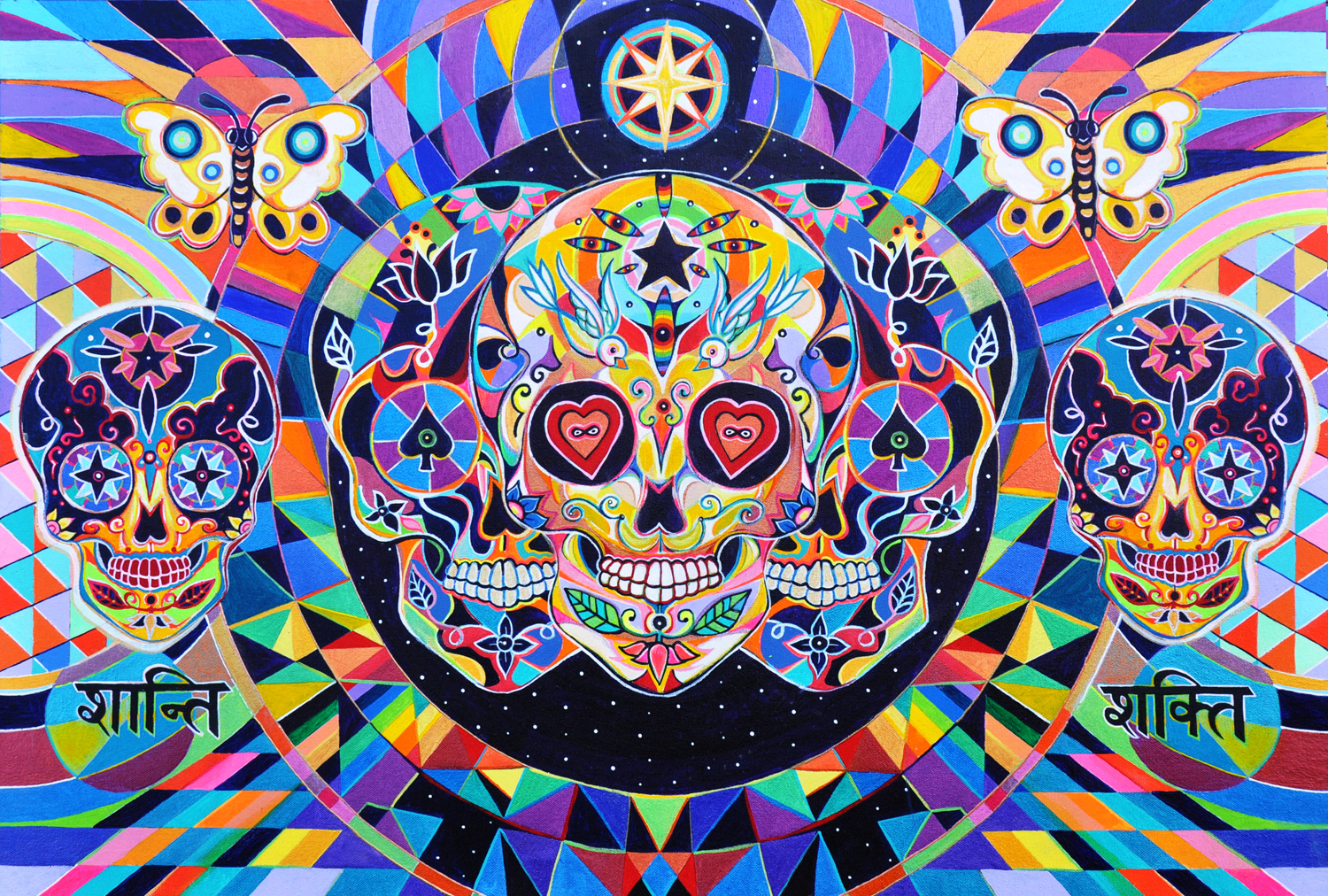
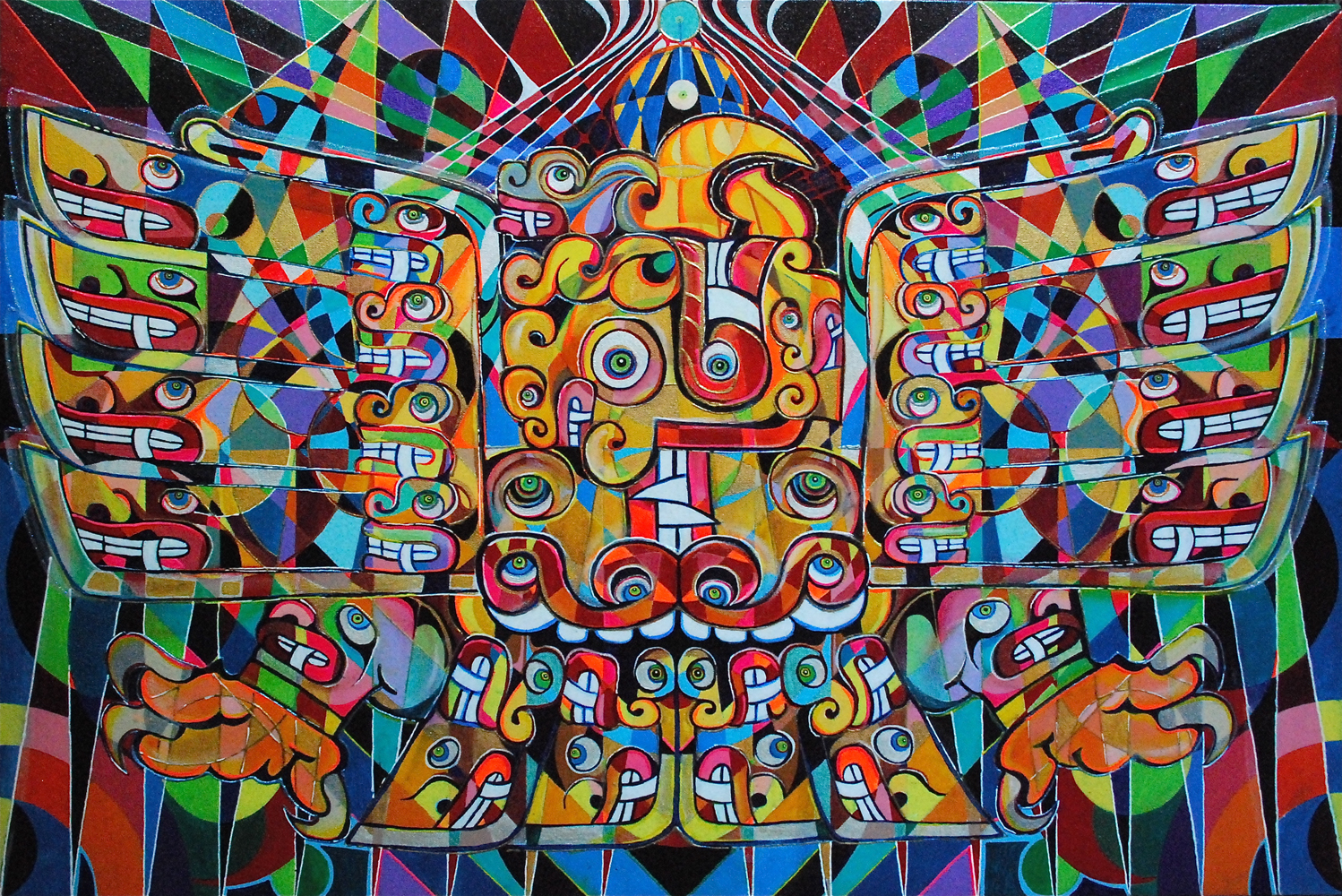
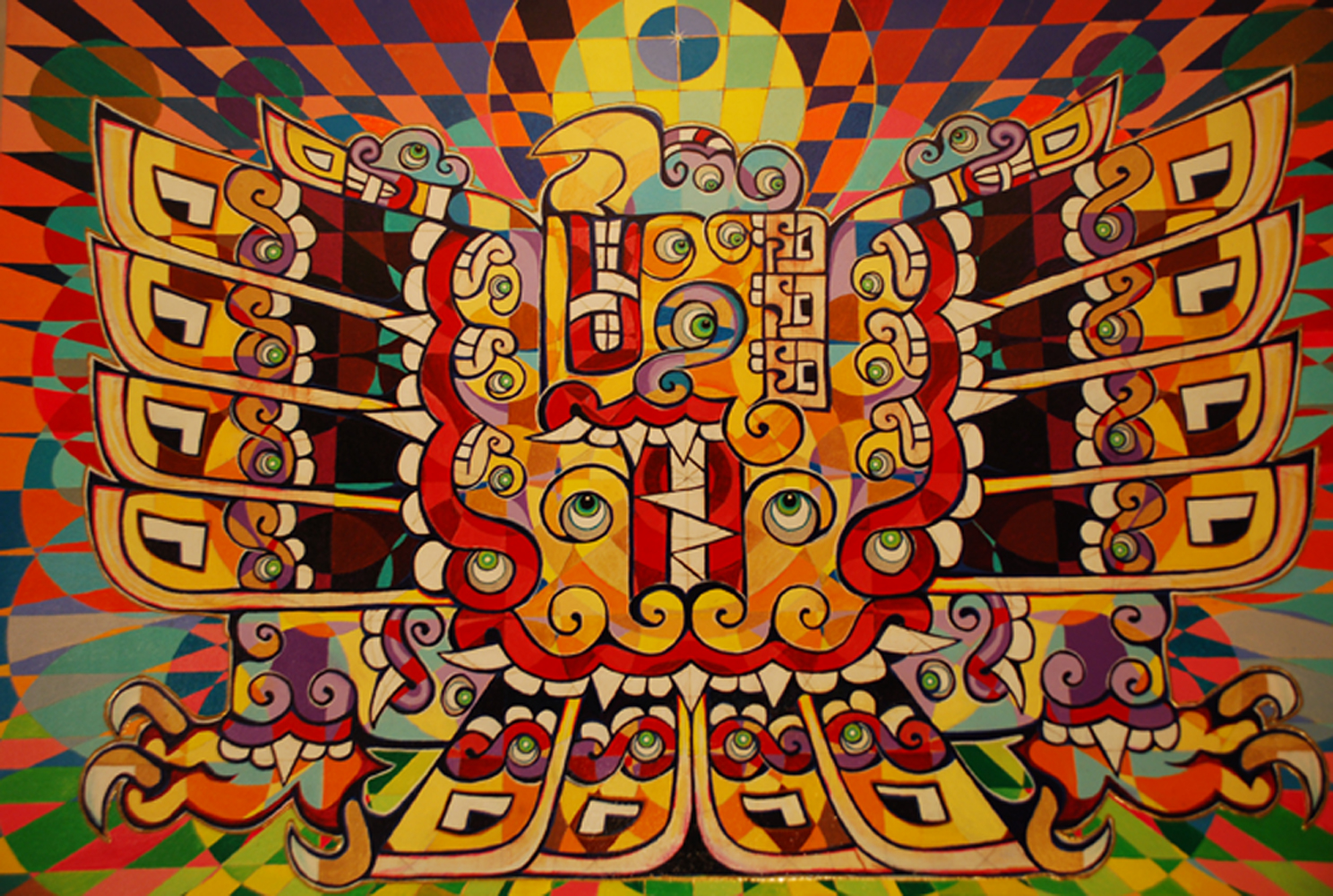
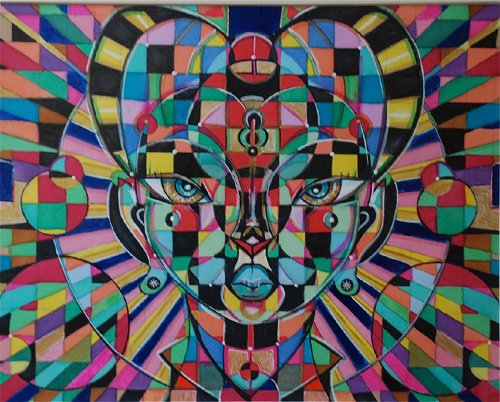
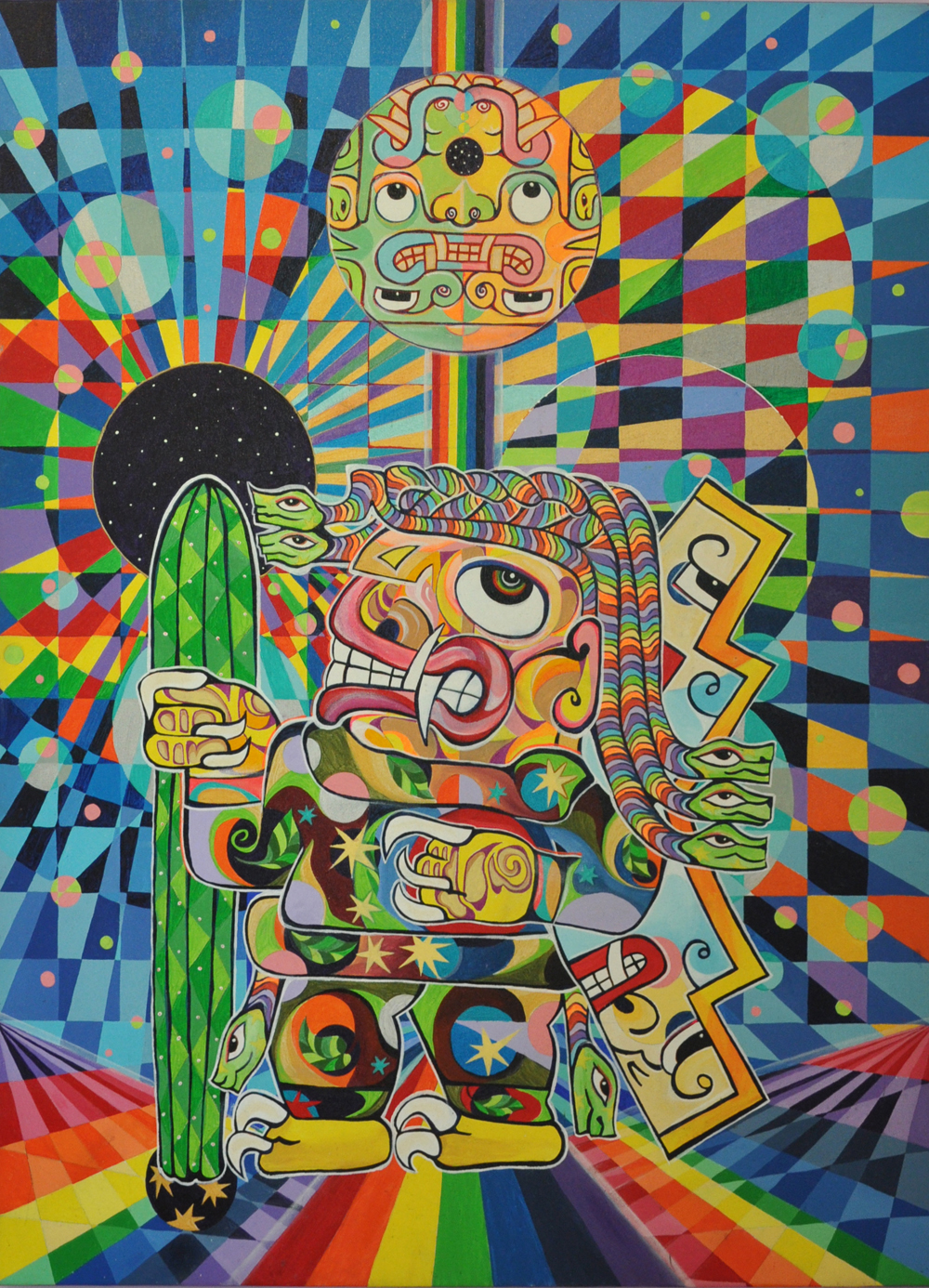
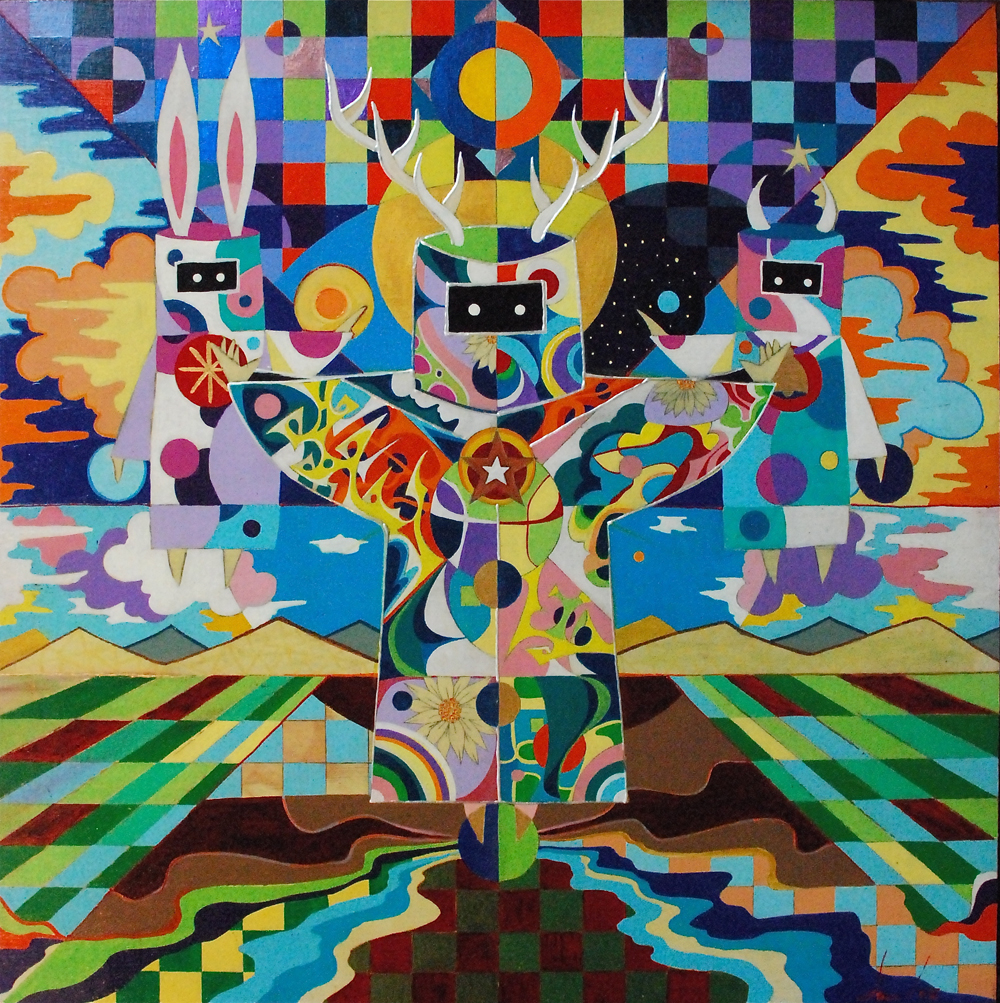
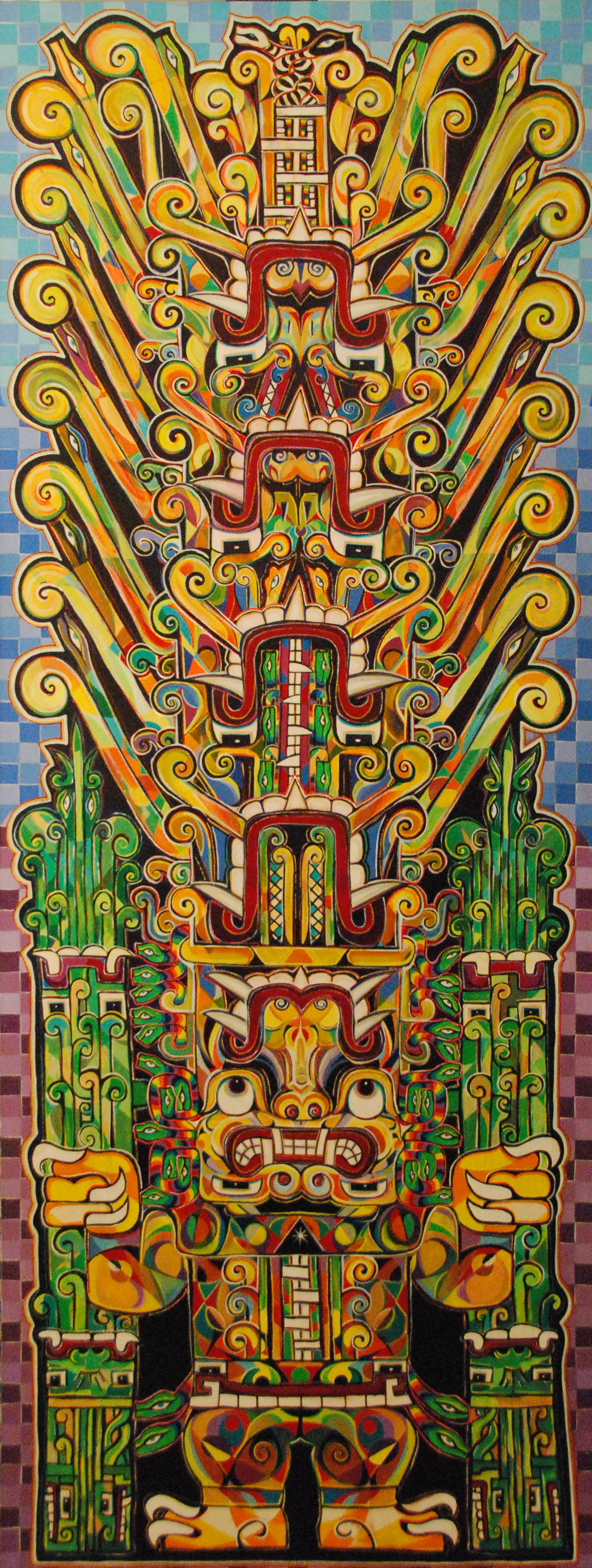
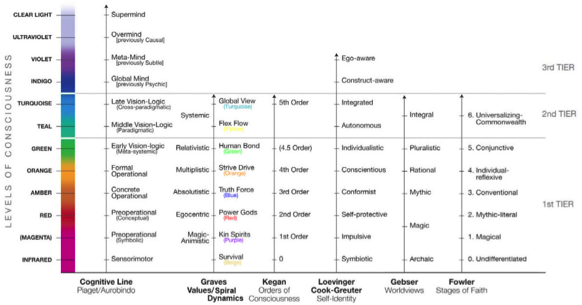
What if the future of self, community, and world—a possible if not yet actualized future—might be secreted away in the various arts? What if art's form crystallizes this promise? What if art today is the locus of a magnified utopian impulse, one that we ignore at our own peril? For indeed, there are many instances of integral art where we can find what Ken Wilber calls "third-tier consciousness" might one day come to be for us. Third-tier can be thought of as the folding of metabolized states of consciousness—most notably subtle, causal, and nondual states—into existing second-tier stage structures, advancing and deepening both horizontal and vertical vectors of kosmocentric wisdom. A number of David Frank's paintings encode such kosmocentric seeing. In the lower portion of Sinchi Medicina there are orthogonals (receding diagonals towards a common vanishing point as in a Renaissance perspective painting); these receding wedges of space segmented into various luminous colors inclusive of black void. Each color vibrates at its own frequency, evincing its own unique sense of spatial presence and transparency/opacity—as if the perspective grid gathers various realms, each defined by its own color-light, allowing the autonomy of each color realm to stand forth while contributing to the make-up of a larger order. These orthogonals move up and towards the central figure, passing through several transversal lines that demarcate ever more domains. As the segmented-wedges of light and void pass through into these zones, their color-substance changes while maintaining perspective flow. This kind of composing extends to the top areas of the image-field, where there are various intersecting orders of circles, further interlocking realms. Throughout, subtle radiance as color-light and causal voidness as sheer blackness are like materials that have been folded into and come to inform a multi-dimensional structure that is at once holarchical, integrated, and dynamically shifting. This is a third-tier worldspace that, if one draws on the prescient scheme offered by Ken Wilber, entails the movment from violet (intuitive or meta-mind) and its integration of the subtle to ultraviolet (overmind) and the beginnings of the structural-incorporation of the causal. Such overmind components of causual voidness are even more apparent in Sora Chan, where black zones empty out as deep void, stars signaling here a vastness of scale that intersects with the smaller scale of the foreground figure. Large and small, vast and immediate, radiance and voidness, near and far, all interwoven as internal to the structure of this pictorial world. David Frank's art gifts us with exactly this sort of third-tier kosmocentric perception. Michael Schwartz
|
|||||||||||||||||||||||||||||||||||